
Product news, releases and industry insight.
What we’re shipping, what we’re seeing across the operators we work with, and the technical topics we keep coming back to.
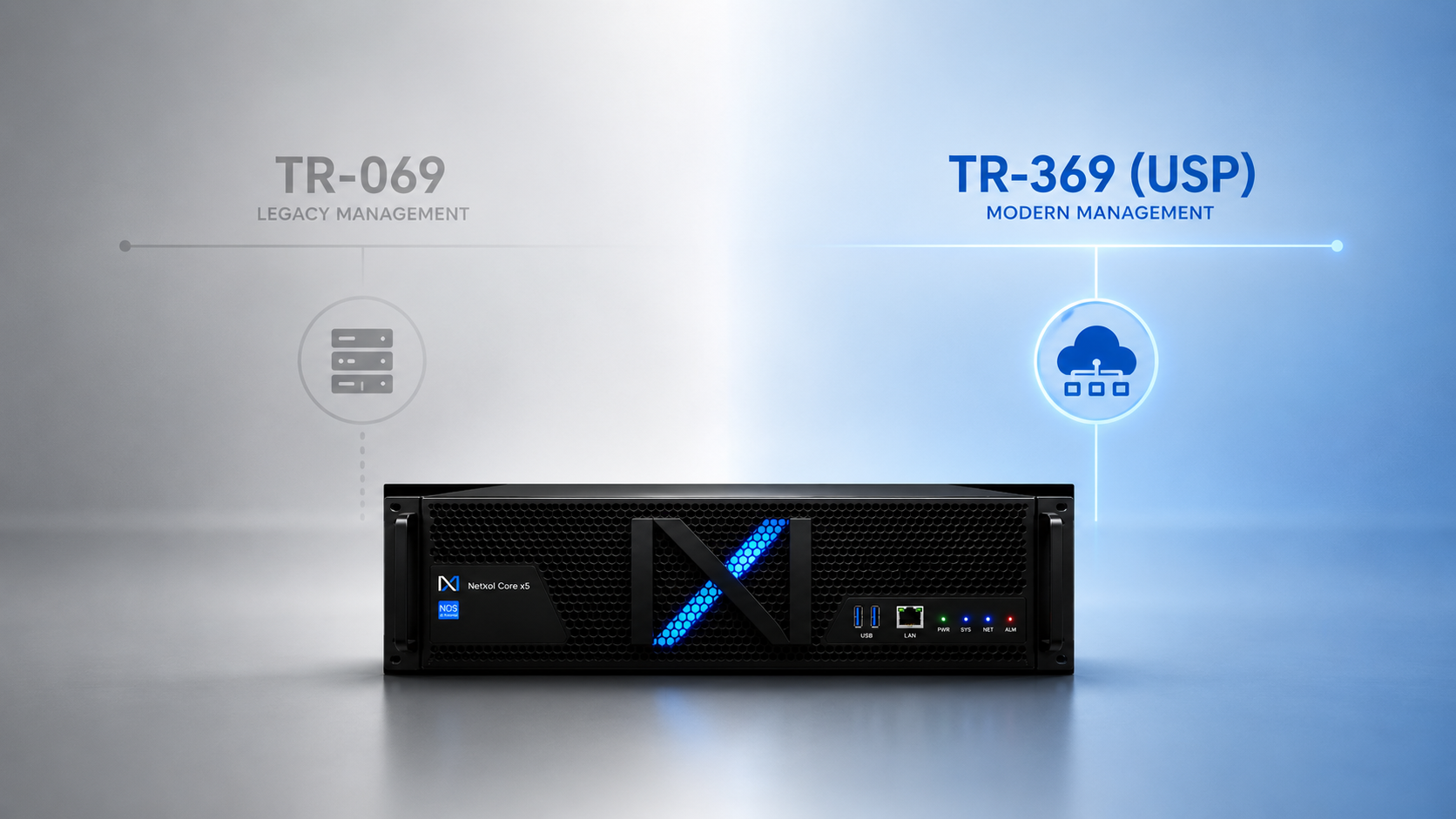
TR-069 vs TR-369 (USP) in 2026: a practical guide for FTTH operators
CWMP has run our CPE networks for fifteen years. USP is the modern successor. Here is what changes, what does not, and how to think about the migration today.
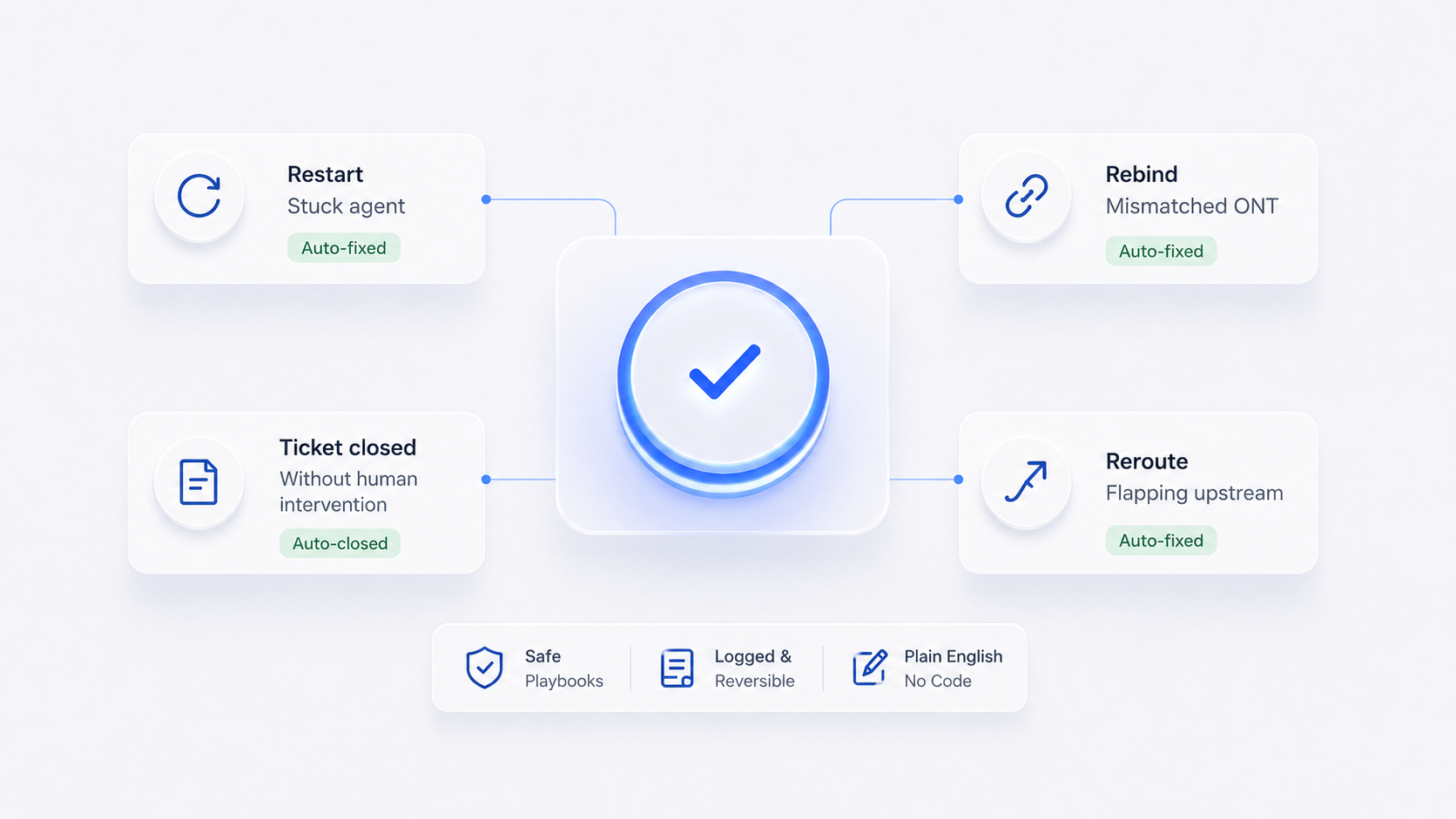
Automating root-cause analysis on a GPON network
When an ONU goes dark, the answer is usually in the optical power, the OLT port and the neighbours. Here is how AI backtraces it in seconds — and how to evaluate any RCA engine.

Plan capacity before saturation, not after
Month-on-month growth is predictable — if you measure it. AI capacity planning turns traffic trends into procurement decisions weeks before users feel the squeeze.

Zero-touch auto-provisioning: from box-arrival to live in 8 minutes
New-subscriber activation used to take days. Done right, modern auto-provisioning collapses it into a fully unattended workflow — here is the anatomy.
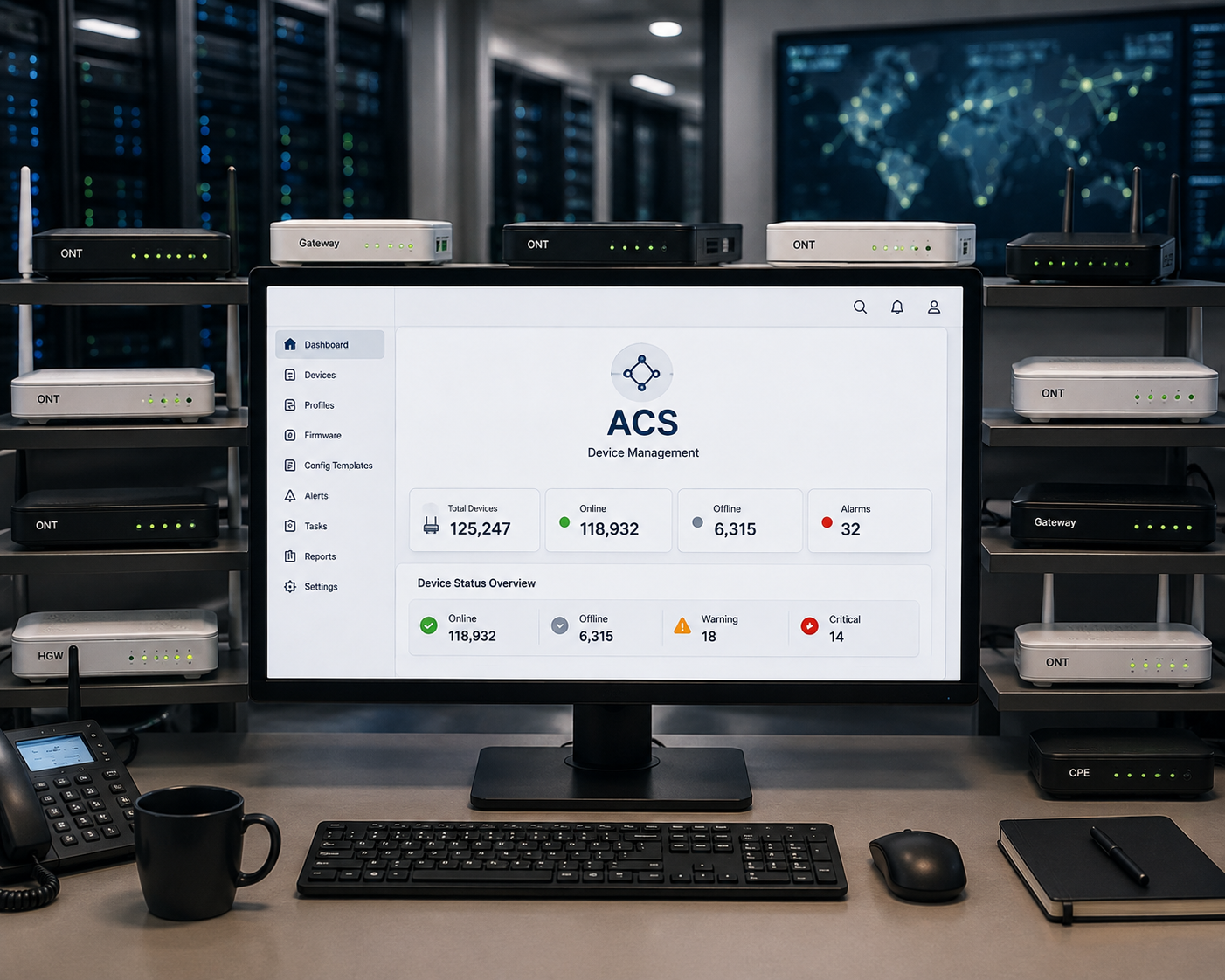
The ACS your network actually needs (a 2026 deep dive)
Most ACS deployments were built when 30,000 ONTs felt big. The protocols moved. The fleets moved. Here is what a modern ACS has to do — and how to tell.

AI in networking, 2026 — beyond the buzz: what works and what does not
Every networking vendor has an "AI" badge in 2026. Some of it is real. Some of it is repaint. Here is how to tell, and where AI genuinely changes the operating model.

The OpEx anatomy of an FTTH ISP — where your money actually goes
Most ISPs cannot answer "what does it cost to run one subscriber for a month?" without arguing. This is the breakdown we keep arriving at — and where the savings live.

10 operational issues we keep finding inside FTTH ISPs
A field-tested list of the issues we walk into on day one of almost every deployment — and the patterns to fix them.
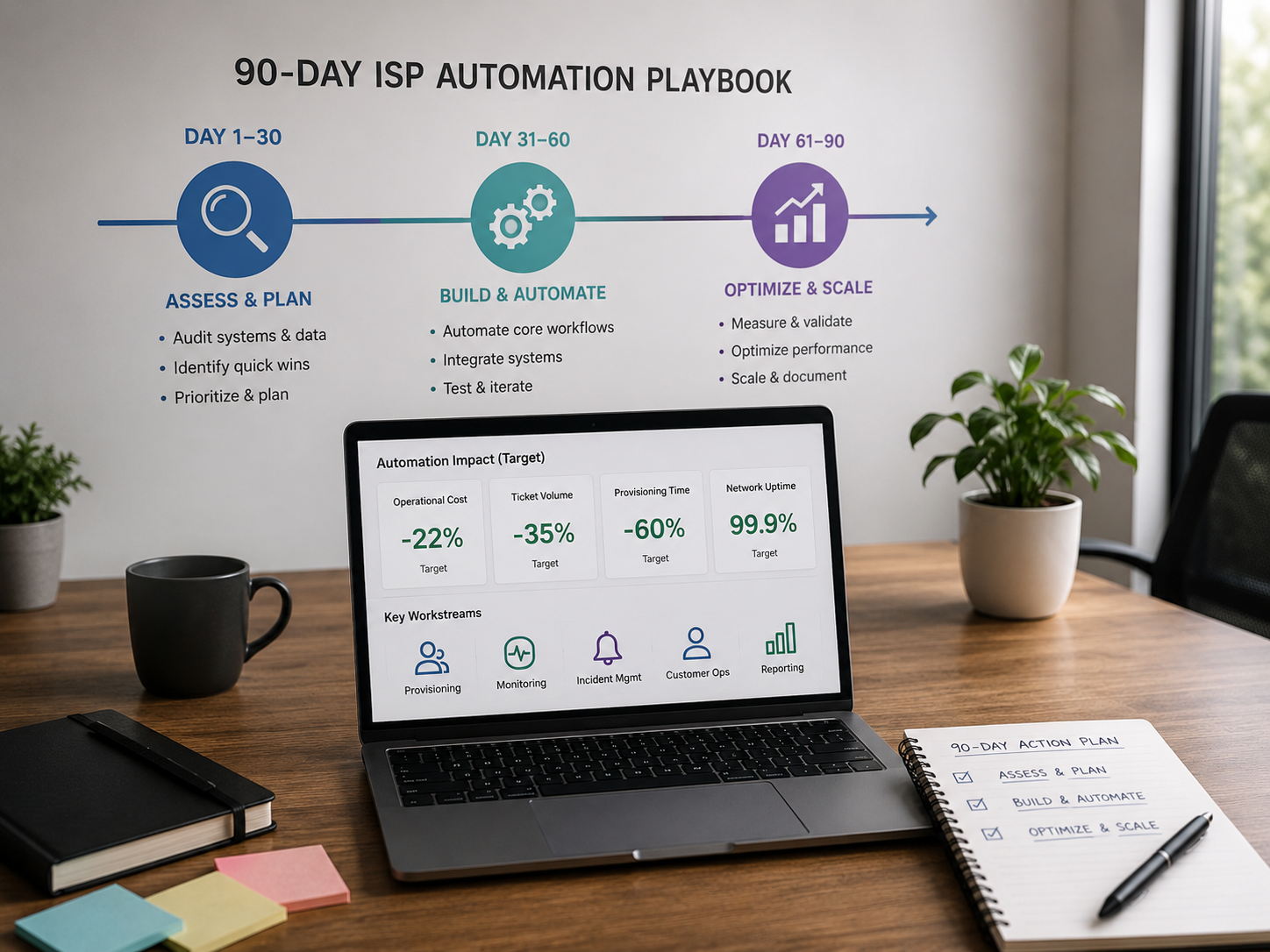
ISP automation done right: a 90-day playbook
If you have 90 days to make a visible dent in operational cost and reliability, here is the sequence we would run — and why.

Netxol NMM vs LibreNMS: what an FTTH ISP actually needs
LibreNMS is a great starting NMS. It is also where an ISP hits its ceiling — no ACS, no CRM link, no OLT provisioning. Here is the honest side-by-side.

Netxol NMM vs Zabbix for ISPs: monitoring platform vs. ISP operating layer
Zabbix is a first-class general-purpose monitoring platform. It is also not an ISP tool. Here is what changes when you evaluate NMM for an FTTH network.

Netxol NMM vs SolarWinds NPM: enterprise monitoring vs. ISP operating layer
SolarWinds NPM is a heavyweight enterprise NMS. For an FTTH ISP, the question is not "is it capable?" — it is "does it know what an OLT is?"
Netxol ACS vs GenieACS: from an open-source ACS to an ACS on the ISP graph
GenieACS is the community's go-to open TR-069 server. It gets an FTTH ISP started fast — until subscriber provisioning stops being a monitoring problem and starts being a business one.

Netxol RADIUS vs FreeRADIUS + daloRADIUS: from a AAA server to a subscriber layer
FreeRADIUS is a superb AAA server. Combined with daloRADIUS you get an admin UI. What you do not get is a subscriber, a plan or an invoice.

Netxol CRM vs Salesforce for ISPs: horizontal power vs. ISP fit
Salesforce is a vast horizontal CRM. For an FTTH ISP the interesting question is whether it knows what an OLT is — and how much stitching you will do to make it.

Netxol Billing vs Splynx: ISP billing tools that know the network
Splynx is one of the few billing platforms actually built for WISPs and FTTH ISPs. Here is where the two stacks differ, honestly.

Netxol Billing vs Sonar Software: WISP / FTTH billing on the ISP graph
Sonar is a strong WISP-focused billing and OSS platform. Here is a fair look at where Netxol Billing pushes further into the FTTH world.

Netxol Core vs Cisco / Nokia appliance-based ISP platforms
Cisco and Nokia sell appliance-plus-software stacks to national carriers. Netxol Core is aimed at the operators the tier-1 vendors overserve.

Netxol NOS vs the open-source ISP stack (LibreNMS + FreeRADIUS + GenieACS + Splynx)
The typical DIY ISP stack is four open-source products stitched together. Here is a fair look at where the seams hurt and what a single AI-native platform replaces.

Netxol vs Zalpro Solutions: an honest look at two Pakistan-relevant ISP platforms
Zalpro Solutions is a well-known Pakistani ISP billing and management platform. This is a fair, methodical comparison against Netxol NOS — what each stack does, where they overlap, and where they part ways.
TR-369 (USP) in production: a study of what actually works in 2026
TR-369 (USP) is the Broadband Forum's successor to TR-069. Six years after the spec, this is a field study of what production adoption looks like — transports, controllers, agents and the tricky bits.

Multi-vendor GPON at scale: a study of what breaks between 20K and 200K ONTs
Multi-vendor GPON works up to a point. This is a study of the four specific things that break past 20K ONTs — and what changes at 200K.
RADIUS at 100K concurrent sessions: a scaling study for FTTH ISPs
FreeRADIUS scales further than most people believe. Netxol RADIUS scales further, and integrates with the rest of the ISP graph. A concrete study of what breaks at scale.

Optical power monitoring: the leading indicator FTTH ISPs still under-use
Optical Tx/Rx power is the single most valuable telemetry an FTTH ISP has. It is also the least-used. A study of why, and what the operational payoff looks like.

JazzCash and EasyPaisa for ISPs: how Netxol collects subscriber payments in-app
The Pakistani ISP market runs on JazzCash and EasyPaisa. Getting them into your Subscriber App used to be a project. With Netxol's aggregation layer, it is a switch.
Card-on-file for Pakistani ISPs: 3DS, recurring collection and the operational reality
Recurring card collection via Mastercard and Visa lifts postpaid AR performance materially. Here is how it works in Pakistan, and what an operator needs to know to enable it.
Payment aggregation vs. direct merchant contracts: what an ISP actually gains and loses
Sooner or later a growing ISP asks: should we stay on Netxol's aggregated payments or move to direct merchant contracts? Here is the honest trade-off analysis.